800+ professionals. 63 exhibit booths. One pressing question echoing through every session at the Hilton Anatole in Dallas: with dispatch wages at $18/hr and driver turnover above 64%, how does NEMT survive its labor crisis without losing the human care that defines it?
Walking into the room
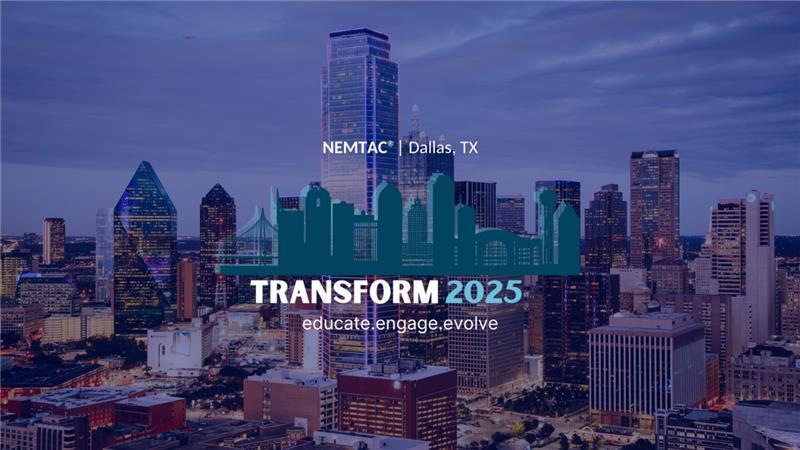
The stage was set at the elegant Hilton Anatole in Dallas, Texas — a fitting venue for an event that brings together some of the most dedicated professionals in the Non-Emergency Medical Transportation industry. For CTNP Corp, this was a first. We joined NEMTAC Transform 2025 upon the recommendation of one of our clients, and we were not prepared for what we found.
NEMTAC Transform 2025 — By the Numbers
The nation's only standards-driven NEMT conference — and it sold out.
From the sold-out exhibit floor to exclusive roundtables and receptions, NEMTAC brings together transportation providers, healthcare leaders, brokers, regulators, and innovators under one roof. We've attended conferences across three continents. We've never seen a room this engaged.
For us, this wasn't just a networking event. With over 31 years of outsourcing experience serving clients across the U.S., Japan, and the Philippines, we came to listen. We already work with clients in the NEMT space — but we came to NEMTAC to understand the industry more deeply. What we heard was both urgent and clarifying.
The cost challenge the industry can't ignore
One learning session crystallized what many providers were already feeling. The average dispatch wage in the U.S. now sits at $18 per hour. For a single full-time dispatcher working 40 hours a week, that's roughly $37,400 per year in base wages alone — before benefits, overhead, training, turnover costs, or management time.
Multiply that across even a modest operation, and the arithmetic becomes painful. For an industry already navigating tight Medicaid reimbursement rates, post-pandemic recovery, and surging demand from an aging population, labor is the next major pressure point.
The NEMT industry, like many healthcare-adjacent sectors, suffered significantly during the global pandemic. Companies fought to survive, and many did. But survival has given way to a new challenge: a labor market that simply isn't scaling with demand.
NEMT global market growth — 2021 to 2032 (USD billions)
Demand is growing fast. The workforce — and the cost of that workforce — is growing faster.
Source: Mordor Intelligence 2026; Elite Med Financials NEMT Statistics; ResearchAndMarkets Strategic Report 2025.
Is AI the answer? Not exactly.
The familiar solution surfaced quickly: automate it. AI-driven dispatch, chatbots for booking, automated voice systems for reservations. The technology exists. Some providers are deploying it.
But here's the reality that kept returning in conversations on the exhibit floor and in session Q&As: NEMT is not a logistics problem. It is a care problem.
"Would you want your grandmother to speak to an AI about her transportation to dialysis? The answer to that question tells you everything about what this industry actually provides."
— CTNP Corp, NEMTAC Transform 2025The people using NEMT services are often elderly, disabled, managing chronic conditions, or navigating moments of vulnerability. When they call for a ride to their chemotherapy appointment or their dialysis session, they are not looking for efficiency. They are looking for reassurance. For someone who understands their situation. For a voice that communicates care — not just confirmation numbers.
AI can optimize a route. It cannot hold space for a frightened patient who doesn't know if their ride will arrive on time.
What NEMT riders value most in a service interaction
Efficiency ranks — but the top factors are all human. AI addresses the bottom half of this list.
Source: NEMT Consumer Satisfaction Data; NEMTAC Provider Survey 2025; Healthcare Transportation Research Collaborative.
This doesn't mean technology has no place in NEMT. GPS tracking, route optimization, EHR integration, and digital dispatch platforms are all essential infrastructure. The question isn't whether to use technology — it's whether to put it in front of the patient or keep it behind your team.
Our "AI" — Actual Individuals
While the rest of the industry debates artificial intelligence, Cebu tele-net Philippines is returning to something older and more reliable: the belief that the best service comes from people who genuinely care about the person they're helping.
When we say "AI" at CTNP, we mean Actual Individuals — rigorously trained professionals who understand the emotional terrain of NEMT calls. People who know that the caller asking about their ride to a medical appointment may be scared, confused, or in pain. People trained not just to complete a task, but to recognize what the caller actually needs.
This is the foundation of our 31-year operating philosophy: Japanese Hospitality with Filipino Excellence.
Japanese Heritage
Omotenashi — Anticipatory care
Omotenashi is the Japanese philosophy of service that anticipates needs before they are spoken. Our teams don't wait to be asked. They recognize urgency, acknowledge emotion, and act with the kind of attentiveness that turns a stressful call into a reassuring one.
Filipino Culture
Malasakit — Sincere ownership
Malasakit is the Filipino spirit of genuine care and personal responsibility for another's wellbeing. In an NEMT context, it means an agent who doesn't simply close the ticket — they stay with the caller until they are confident the ride is confirmed and the patient is at ease.
Operational Design
Technology supports people — it doesn't replace them
Our agents work alongside dispatch platforms, scheduling software, and real-time tracking tools. These systems make our people faster and more informed. They don't make our people unnecessary. The patient still speaks to a human. Every time.
The cost case — human outsourcing vs. in-house
The most common objection to outsourcing is the assumption that keeping staff in-house preserves control. In NEMT, where the margin for operational error is thin, that instinct is understandable. But the numbers tell a different story.
| Cost Factor | In-House U.S. Dispatcher | CTNP Outsourced Agent |
|---|---|---|
| Base hourly wage | $18.00/hr | ~$7–8/hr equivalent |
| Annual salary (FTE) | ~$37,400 | ~$14,000–16,000 |
| Benefits & payroll tax | Add 25–35% | Included |
| Recruitment & onboarding | $3,000–6,000 per hire | Handled by CTNP |
| Annual turnover rate | ~64% industry average | Significantly lower |
| Training for NEMT context | Internally resourced | CTNP specialization program |
| Scalability | Fixed headcount | Scales with trip volume |
| Estimates based on U.S. Bureau of Labor Statistics dispatcher wage data and CTNP Corp operational benchmarks. Actual savings vary by operation size. | ||
💰 Dispatch Cost Savings Calculator
Estimate your potential savings by outsourcing dispatch operations to CTNP Corp.
Estimated annual savings with CTNP: —
True cost of a U.S. in-house dispatcher vs. CTNP outsourced agent (annual, per FTE)
Most providers only count the wage line. The real cost is significantly higher.
Source: U.S. BLS Dispatcher Wage Data 2025; CTNP Corp operational benchmarks; SHRM Recruitment Cost Research.
What we're carrying forward from Dallas
We left NEMTAC Transform 2025 with more than business cards and session notes. We left with a clearer picture of an industry that is simultaneously under enormous pressure and full of extraordinary people.
CTNP's commitment to the NEMT sector is clear: as outsourcing leaders with operations in the U.S., Japan, and the Philippines, we are here to support NEMT providers with cost-effective solutions that never lose sight of what matters most — care for the patient on the other end of the line.
Frequently asked questions
What is NEMTAC Transform and who attends?
What is the biggest challenge facing NEMT providers in 2025–2026?
Can outsourcing NEMT dispatch to the Philippines maintain quality of care?
How much can NEMT companies save by outsourcing dispatch to CTNP?
Does CTNP Corp replace human agents with AI?
Let's talk about your NEMT operations.
If rising labor costs or dispatcher turnover are putting pressure on your operation, we should talk. CTNP has served the NEMT sector for over 31 years — and we're just getting started.
Connect with CTNP Corp →