There is a new question businesses should be asking when they evaluate an outsourcing partner:
Has this provider actually trained its people to work responsibly with AI?
The answer cannot be determined by whether the provider has the word "AI" on its website.
Real AI readiness starts with people.
Leaders need to understand what the technology can do, what it cannot reliably do, which workflows are appropriate for automation, how output should be reviewed, how data should be handled, and when a human must remain accountable for a decision.
That is why Cebu Tele-net Philippines began with leadership capability rather than treating AI adoption as a software rollout.
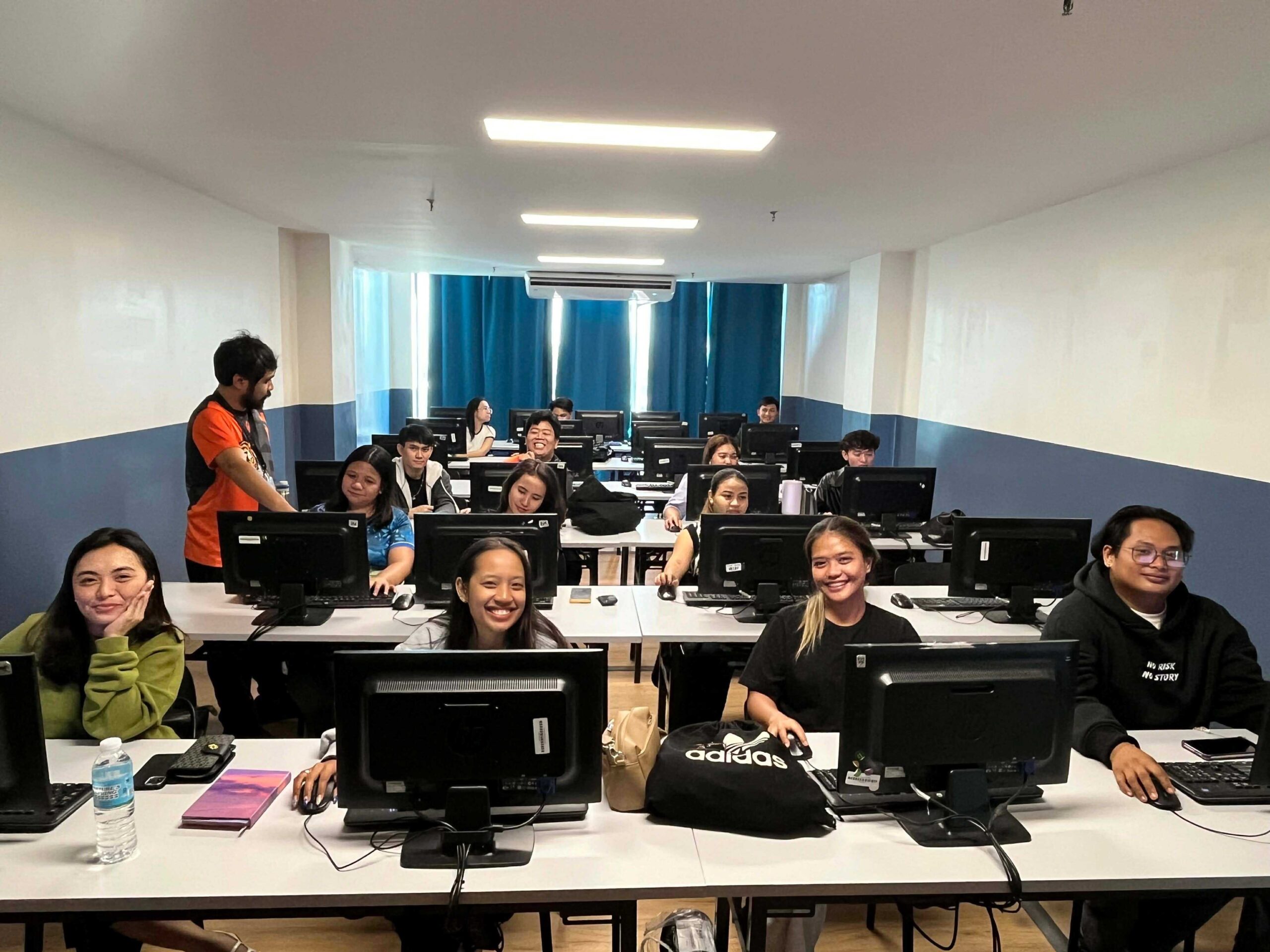
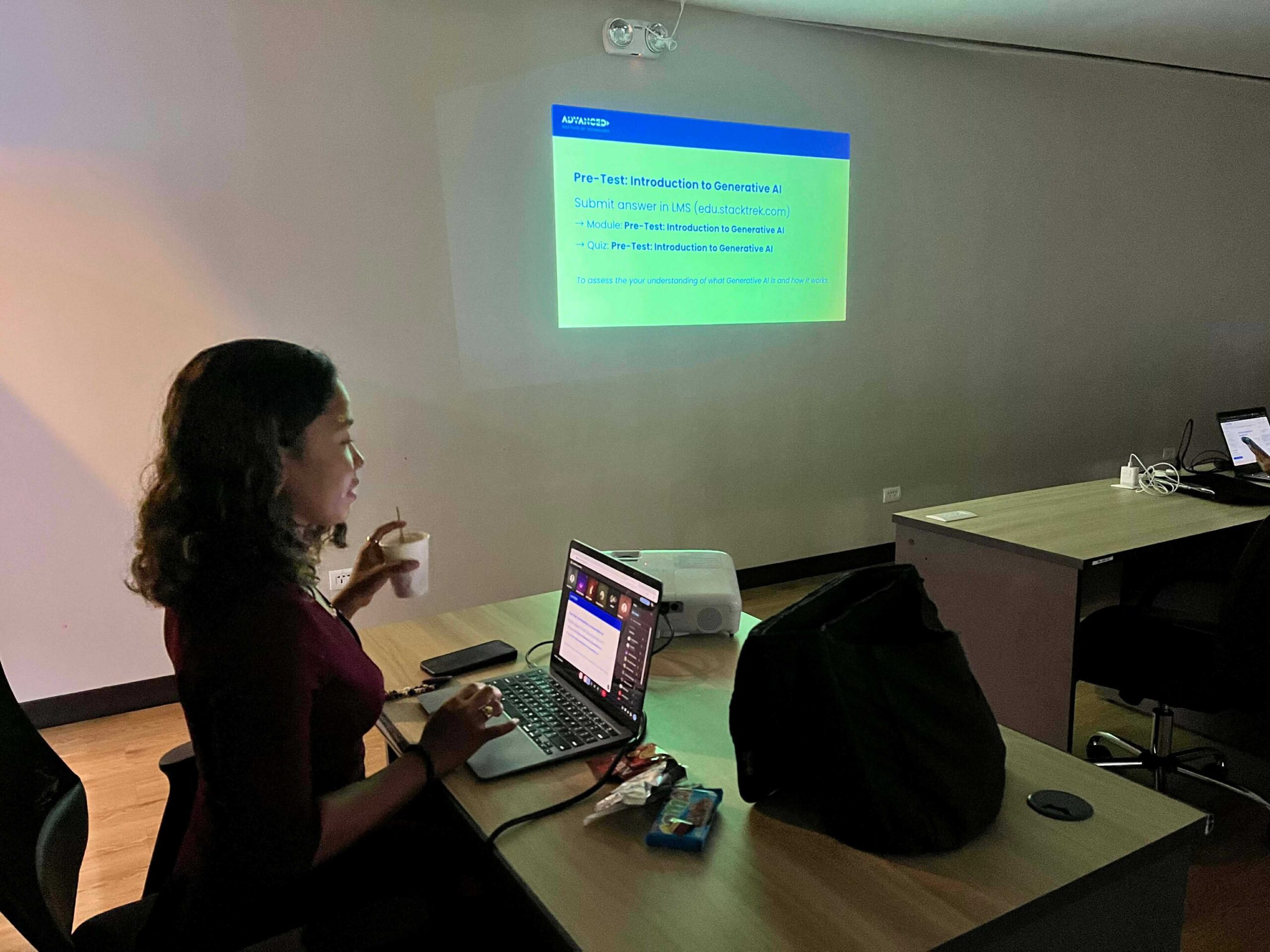
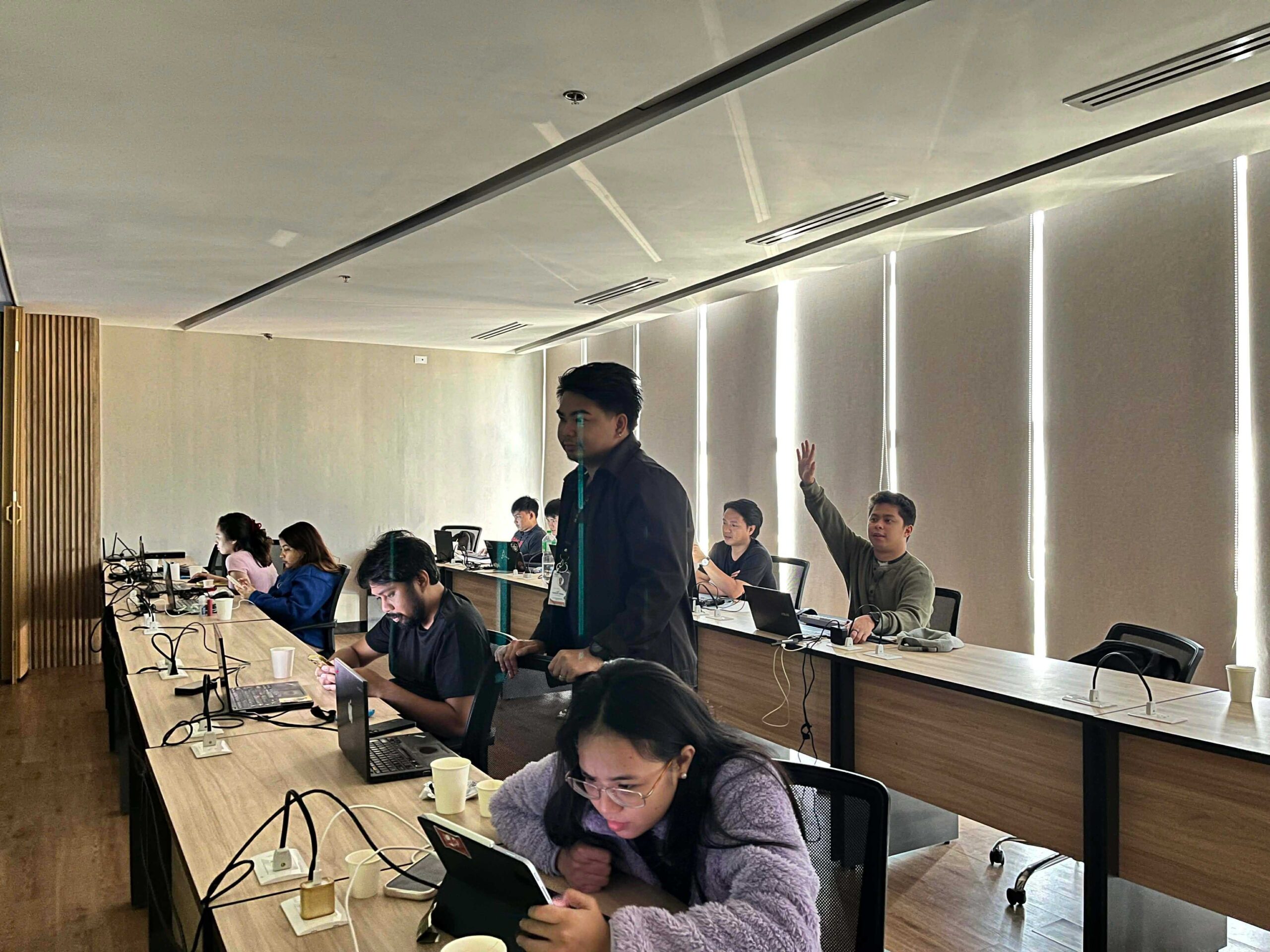
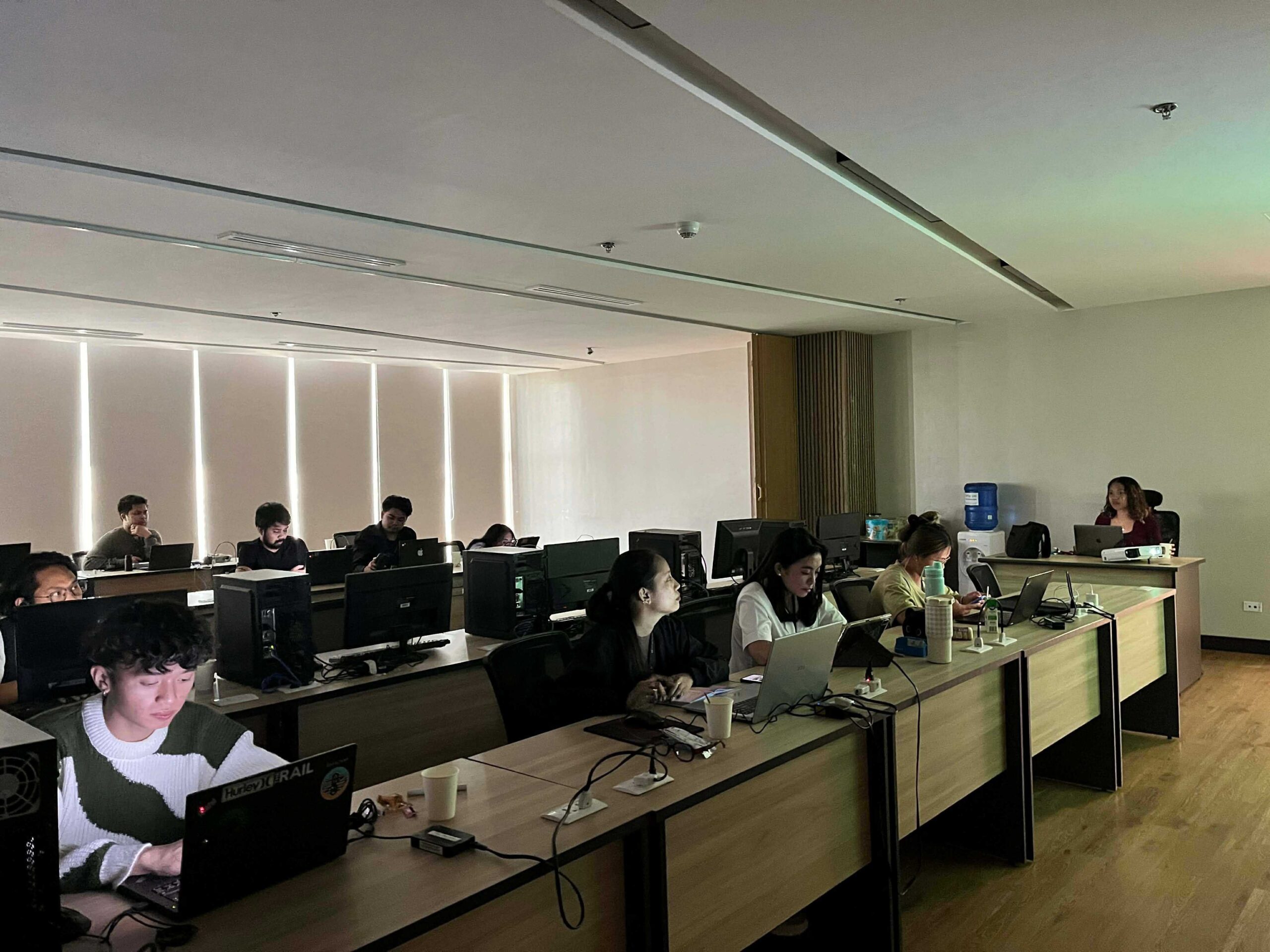
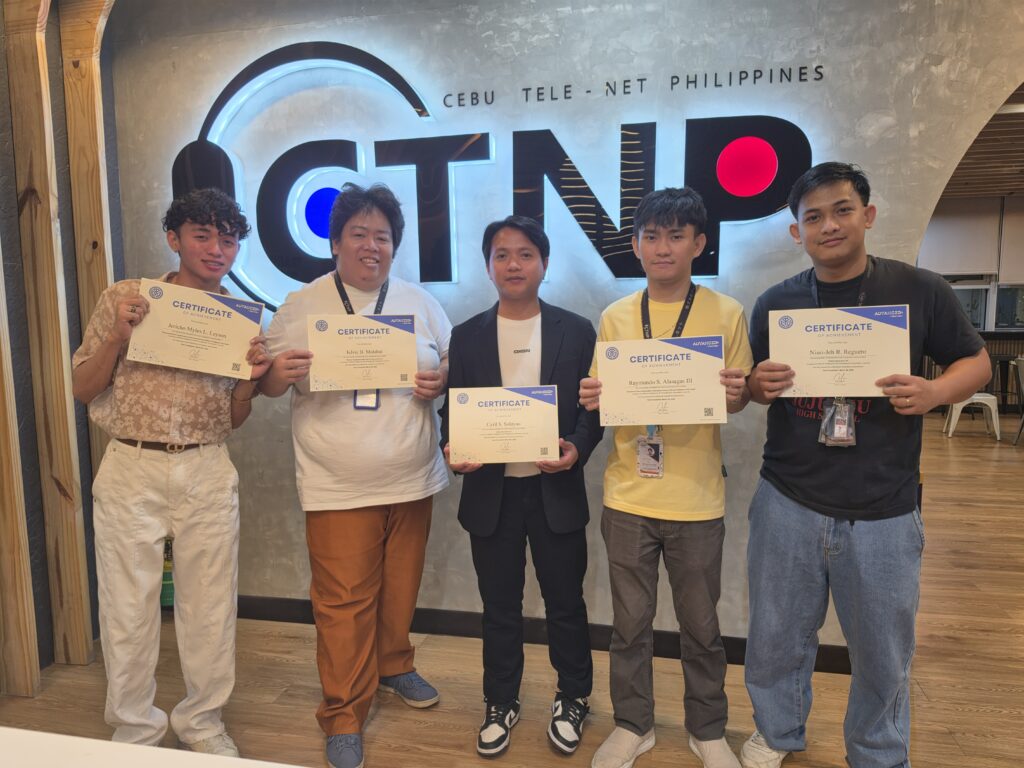
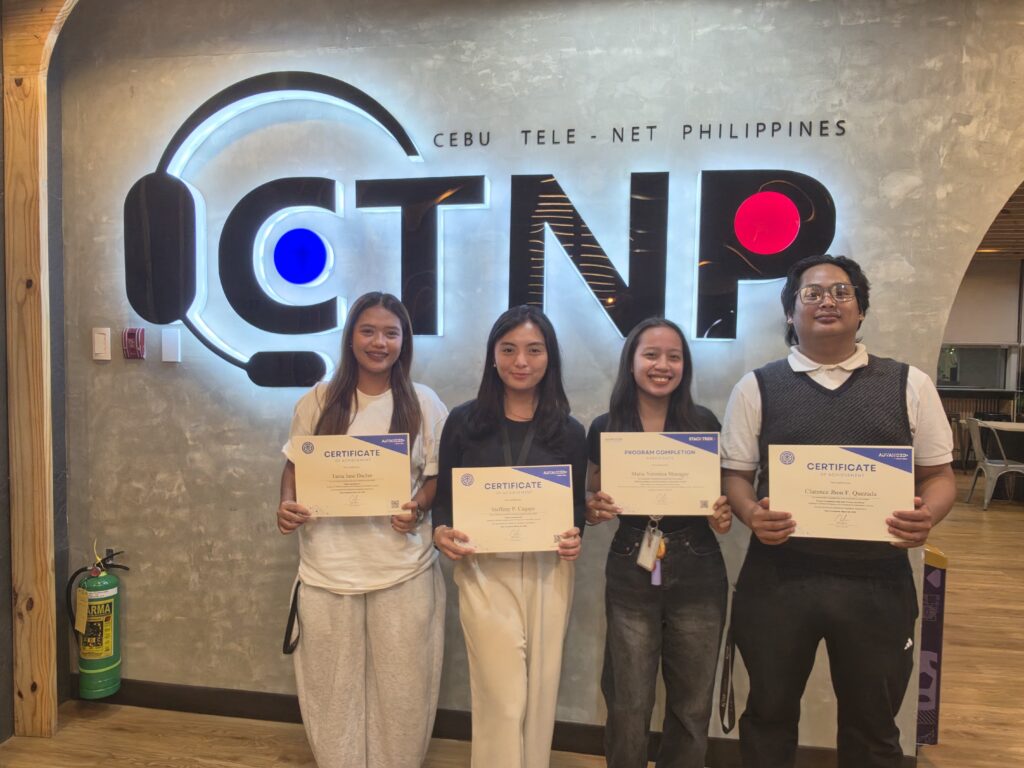
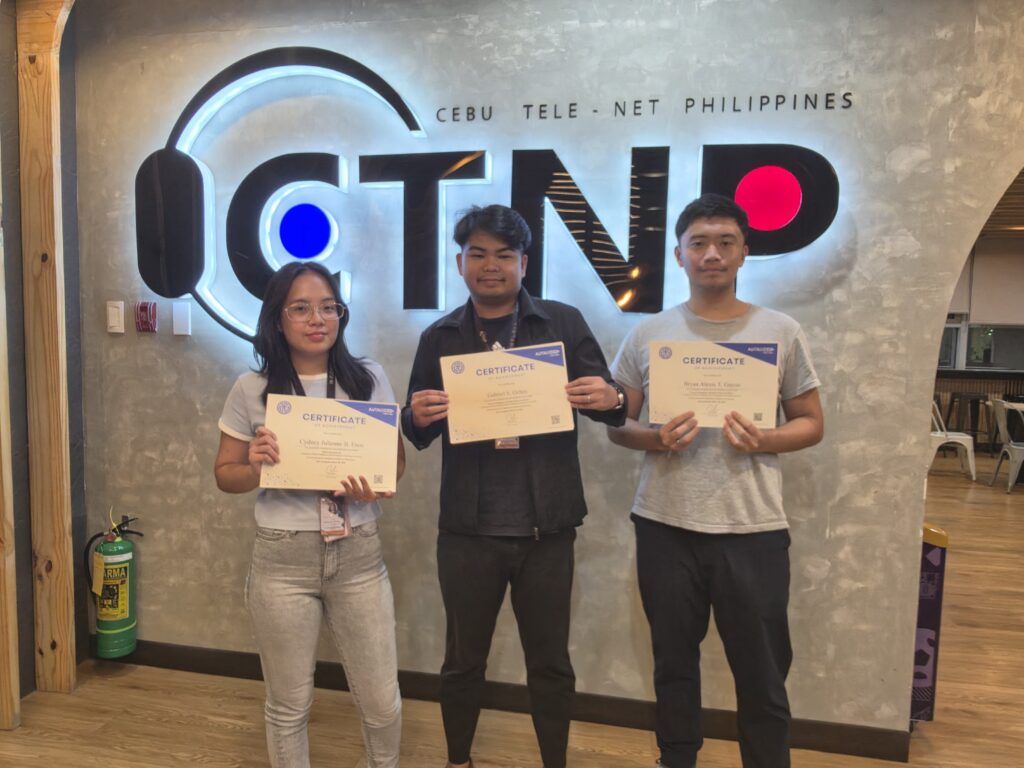
In April 2026, CTNP's leadership team completed hands-on AI readiness training inside its Cebu operation. The objective was practical: understand the tools, apply them to real operational work, identify appropriate use cases, and establish clearer boundaries around responsible AI use.
Why Does AI Training Matter for BPO Leadership?
Artificial intelligence is already moving from experimentation into outsourced service delivery.
Deloitte's Global Outsourcing Survey found that 83% of surveyed executives were already leveraging AI as part of outsourced services.
At the same time, Deloitte cautioned that interest in AI does not automatically produce productivity or cost improvements. Governance, contracting, digital-workforce strategy, provider collaboration, and well-defined use cases still determine whether the technology creates meaningful value.
That distinction matters.
A BPO can have access to powerful AI tools and still be operationally unprepared to use them.
Training therefore becomes a practical readiness requirement. The people responsible for operations need to understand both the opportunities and the limitations before AI-assisted processes reach production.
The direction of the Philippine IT-BPM industry reinforces that point.
In its 2028 outlook, the IT and Business Process Association of the Philippines said the industry's next stage will depend less on workforce scale alone and increasingly on higher-value capabilities and AI-enabled talent.
That makes AI capability a workforce-development issue as much as a technology issue.
AI training is not the same as AI deployment. A provider can train its leaders, establish governance, test workflows, and build employee capability before deciding which tools should be deployed on a specific client account. Production use should still depend on client requirements, security, data access, systems, and approved operating procedures.
Why Does CTNP Keep Human Judgment in AI-Assisted Service?
AI can automate or accelerate some tasks. That does not mean every customer interaction should become AI-only.
SurveyMonkey's 2026 U.S. customer-service research found that 79% of Americans strongly preferred interacting with a human rather than an AI agent. It also found that 89% believed companies should always provide the option to speak with a human.
That creates an important design principle for outsourced service operations:
Use AI where it improves the work. Keep human judgment where accountability, empathy, context, exceptions, or customer trust require it.
For CTNP's broader analysis of how AI is affecting BPO jobs, workforce economics, and outsourcing pricing, see AI and Call Center Jobs: Why BPO Pricing Must Change .
CTNP also explores the customer-experience risks of excessive automation in Why AI-First Customer Service Is Quietly Failing .
"The risk isn't that AI replaces your outsourced agents. The risk is that your BPO partner never equips them."
CTNP CorpExplore BPO Solutions Supported by AI-Ready Teams
See how CTNP combines human-centered service, operational discipline, and AI-assisted workflows across customer service, back-office support, transportation, healthcare, technology, retail, and other business operations.
Explore BPO SolutionsWhat Did CTNP's Leadership AI Training Cover?
CTNP's AI readiness program was conducted in Cebu so leaders could connect AI concepts directly with the environment in which client operations are managed.
Rather than treating AI as a presentation topic, the sessions focused on practical interaction with AI tools and the operational questions that arise when those tools enter real business workflows.
AI Workflow Automation
Leaders examined where AI and automation can reduce repetitive work, support structured workflows, accelerate information processing, and allow managers to focus more attention on exceptions, decisions, coaching, and client outcomes.
Prompt Engineering and AI Tool Proficiency
Hands-on exercises covered practical use of generative AI tools for workflow support, research, drafting, summarization, knowledge development, training content, structured analysis, and other appropriate business tasks.
Generative AI for Outsourced Workflows
The training explored how generative AI can create, transform, summarize, classify, and organize information while also highlighting the need to review output rather than treating generated content as automatically correct.
Data Privacy and Responsible AI Use
Leaders examined where AI should and should not be used, especially when client data, personal information, sensitive interactions, compliance requirements, or decisions requiring human accountability are involved.
Why Should AI Training Start With BPO Leadership?
AI adoption creates operating decisions before it creates technology decisions.
Leaders determine which workflows are appropriate, what information employees may use, what requires approval, which outputs need verification, how mistakes are escalated, how performance is measured, and where human intervention is mandatory.
If leaders do not understand the tools themselves, they cannot govern those decisions effectively.
That is why leadership AI literacy matters before large-scale deployment.
AI Assists
AI can summarize, organize, retrieve, classify, draft, analyze patterns, and support routine workflow execution.
Humans Judge
People remain essential when a situation requires context, empathy, interpretation, accountability, exceptions, negotiation, or judgment.
Governance Connects Them
Policies, permissions, review processes, escalation rules, measurement, and client requirements determine how the two work together safely.
How Does AI Training Support Omotenashi?
For more than three decades, CTNP's service philosophy has been influenced by Omotenashi, the Japanese principle of anticipating needs and approaching service with care, preparation, and attention to detail.
AI does not replace that principle.
Used appropriately, technology can provide additional information, reduce repetitive work, surface patterns, and help employees prepare faster.
But the decision about what that information means and how to respond to the customer remains a human responsibility in situations where judgment is required.
"AI doesn't replace Omotenashi. It gives our agents the data to practise it better, faster, and more consistently than any human could alone."
CTNP CorpCTNP's broader approach to balancing human service and intelligent systems is also discussed in Human Heart, Global Process .
What Should Responsible AI Training and Governance Cover?
AI readiness should include governance, not just capability.
NIST's Artificial Intelligence Risk Management Framework and its Generative AI Profile emphasize managing AI risks throughout the lifecycle of AI systems and integrating trustworthiness considerations into how organizations design, deploy, evaluate, and use AI.
For outsourced operations, that principle becomes practical very quickly.
| AI Readiness Area | What the BPO Should Define | Why It Matters to Clients |
|---|---|---|
| Approved Use Cases | Which workflows may use AI and what the tool is allowed to do | Prevents uncontrolled experimentation inside client operations |
| Data Access | What information can and cannot be entered into an AI system | Reduces inappropriate exposure of client or customer data |
| Human Review | Which outputs require verification before they are used | AI-generated content can be incomplete or incorrect |
| Escalation | When an employee must stop relying on automation and involve a person | Maintains accountability for exceptions and sensitive decisions |
| Quality Measurement | How AI-assisted workflows will be evaluated against existing KPIs | Ensures speed improvements do not hide quality deterioration |
| Security and Privacy | Permissions, approved platforms, authentication, data handling, and retention requirements | Aligns AI use with the client's actual security obligations |
| Change Management | Training, documentation, testing, communication, and approval procedures | Prevents tools from being introduced faster than the operating model can absorb them |
AI readiness does not mean every client account should use the same AI tools. Deployment should be determined by the client's systems, security requirements, workflow, contractual obligations, data classification, customer experience objectives, and approved use cases.
What Does AI Readiness Mean for CTNP Clients?
Leadership training is useful only if it improves how operations are designed and managed.
CTNP's objective is to build the organizational capability to evaluate and deploy AI-assisted workflows responsibly rather than promising that every capability is already active across every account.
More Informed Workflow Design
Leaders who understand AI can identify which repetitive steps are candidates for automation and which decisions still require human ownership.
Better Knowledge Support
AI-assisted search, summarization, drafting, and knowledge organization can help teams find and process information faster when implemented with appropriate controls.
Stronger Quality Analysis
AI-assisted analytics can help quality and operations teams examine larger volumes of interaction data and identify patterns for human review.
More Useful Reporting
Structured AI analysis can support trend identification and summarization, helping managers investigate operational patterns that deserve closer attention.
Faster Administrative Work
Appropriate AI-assisted workflows can reduce time spent on repetitive drafting, summarization, organization, and documentation tasks.
Clearer Human Accountability
Responsible implementation explicitly defines where employees must review, override, escalate, or take ownership instead of delegating judgment to a model.
This distinction between improving service operations and merely automating them is explored further in Customer Service vs. Customer Experience in the Age of AI .
View How CTNP Applies Training to Operational Performance
Review examples of CTNP's work in customer support, workforce stability, outsourcing operations, service improvement, and client delivery.
View Case StudiesHow Can Buyers Evaluate an AI-Ready BPO Partner?
AI readiness should become part of outsourcing due diligence.
Buyers should move beyond asking whether a provider "uses AI" and ask how the provider trains, governs, measures, and integrates it.
- Ask what leaders have been trained on. Executive awareness is different from practical operational literacy.
- Ask which AI use cases are already approved. The provider should distinguish experimentation from production deployment.
- Ask which data may enter AI systems. A responsible provider should have boundaries around confidential, personal, or client-controlled data.
- Ask who reviews AI output. Human accountability should be clear for customer-facing, sensitive, or consequential work.
- Ask how hallucinations and errors are handled. Generated output should not automatically become operational truth.
- Ask how AI-assisted performance is measured. Faster output matters only if quality, accuracy, customer outcomes, and service levels remain acceptable.
- Ask how employees are being trained and reskilled. AI strategy should include workforce capability, not only software procurement.
- Ask whether clients approve account-specific AI use. Providers should not assume every customer has identical security, compliance, or operational requirements.
- Ask what happens when AI should stop. Escalation paths and human intervention should be designed before they are needed.
- Ask for evidence. Training records, governance procedures, controlled pilots, documented workflows, and measurable results are more meaningful than AI branding.
Why Workforce AI Training Matters to Philippine BPO Capability
The Philippine IT-BPM industry's next competitive advantage cannot depend only on the number of people it can employ.
IBPAP's 2028 outlook shifts the industry conversation from capacity toward capability, highlighting AI-enabled talent, specialized services, higher-value work, and continued skills development.
That makes workforce training strategically important.
Employees who understand AI can potentially move beyond repetitive execution toward areas such as quality analysis, exception management, customer insight, knowledge management, process improvement, workflow supervision, and other work where technology and human expertise reinforce each other.
CTNP's broader analysis of how AI may affect call-center jobs, workforce structure, productivity, and BPO pricing is available in AI and Call Center Jobs: Why BPO Pricing Must Change .
CTNP also discusses the Philippines' wider shift toward capability in BPO in Philippines: Why Scale Is No Longer Enough .
Training Completed, Capability Still Developing
CTNP does not view one training session as proof that AI transformation is complete.
The April 2026 leadership program is better understood as a foundation.
It gives the people responsible for strategy, operations, training, technology, client management, and service delivery a stronger common language for evaluating what AI should do inside the organization and where its boundaries should be.
The next stage is disciplined application: identifying suitable use cases, testing them, measuring results, strengthening guardrails, training employees, and expanding only where the technology produces a better operational or customer outcome.
"AI identifies. Humans judge. AI assists. Humans remain accountable."
CTNP operating principle for human-centered AIFrequently Asked Questions
What is AI training in BPO?
AI training in BPO prepares leaders and employees to use AI tools appropriately inside outsourced workflows. Training can include prompt engineering, workflow automation, generative AI, data privacy, human review, responsible-use rules, quality measurement, and escalation procedures.
What does AI readiness mean for a BPO provider?
AI readiness means the provider has trained people, defined governance, identified suitable use cases, established security and data-handling boundaries, created human-review procedures, and developed a method for measuring whether AI-assisted workflows actually improve performance.
Why should BPO leaders receive AI training first?
BPO leaders decide which workflows may use AI, what employees may enter into AI systems, which outputs require human review, how risks are escalated, and how performance is measured. They need practical AI literacy to govern those decisions responsibly.
What did CTNP's AI leadership training cover?
CTNP's April 2026 training in Cebu covered AI workflow automation, prompt engineering, AI-tool proficiency, generative AI, practical business applications, data privacy, responsible use, and the boundaries between automation and human accountability.
Does AI training mean AI is deployed on every CTNP client account?
No. Organizational AI training develops capability and readiness. Actual deployment should depend on each client's workflow, approved tools, systems, security requirements, data classification, contractual obligations, and specific use cases.
How does CTNP approach responsible AI use?
CTNP's approach emphasizes approved use cases, appropriate data handling, human review, escalation, security requirements, quality measurement, client-specific approval, and human accountability where judgment or sensitive decisions are involved.
How does AI training support CTNP's Omotenashi philosophy?
AI training can help employees use technology to retrieve information, identify patterns, organize knowledge, and reduce repetitive work. Human employees remain responsible for interpreting that information and applying the care, preparation, judgment, and attention associated with Omotenashi.
What should companies ask about a BPO provider's AI training?
Ask what leaders and employees have been trained on, which AI tools and use cases are approved, what data may be used, how generated output is reviewed, when humans must intervene, how errors are handled, how AI-assisted performance is measured, and whether clients approve account-specific AI deployment.
AI Readiness Starts With Training
The next generation of outsourced service delivery will not be determined only by which provider buys the newest software first.
It will also depend on which providers train people to use new capabilities intelligently, establish boundaries around them, measure whether they improve the operation, and preserve human accountability when technology reaches its limits.
CTNP's April 2026 leadership training is one step in that process.
The goal is not to declare that transformation is finished.
It is to build a workforce and leadership culture capable of continuing that transformation responsibly as AI, client requirements, and customer expectations evolve.
That is what AI readiness should mean for a BPO provider: not simply adopting artificial intelligence, but preparing people to use it responsibly.
Schedule a Discovery Call About AI-Ready Outsourcing
Discuss your workflow, customer-service requirements, systems, security expectations, operating model, and AI strategy with CTNP to determine where human expertise and AI-assisted processes can work together.
Schedule a Discovery CallDisclaimer: AI capabilities, productivity gains, automation rates, implementation timelines, security requirements, and customer outcomes vary by platform, process, industry, data, account configuration, and client requirements. CTNP's April 2026 training represents organizational capability development and should not be interpreted as a claim that every AI capability described in this article is deployed on every client account.
Sources
- Deloitte. 2024 Global Outsourcing Survey: Multidimensional Sourcing and AI-Powered Outsourcing. Deloitte Global Outsourcing Survey
- IT and Business Process Association of the Philippines. 2028 Outlook: Industry Shifts from Capacity to Capability, July 2026. IBPAP 2028 Industry Outlook
- Salesforce. AI Expected to Resolve Half of Service Cases in the Philippines by 2027, January 2026. Salesforce State of Service Philippines
- SurveyMonkey. Customer Service Trends and Statistics for 2026: Humans vs. AI. SurveyMonkey Customer Service Research
- National Institute of Standards and Technology. Artificial Intelligence Risk Management Framework: Generative Artificial Intelligence Profile. NIST AI RMF Generative AI Profile